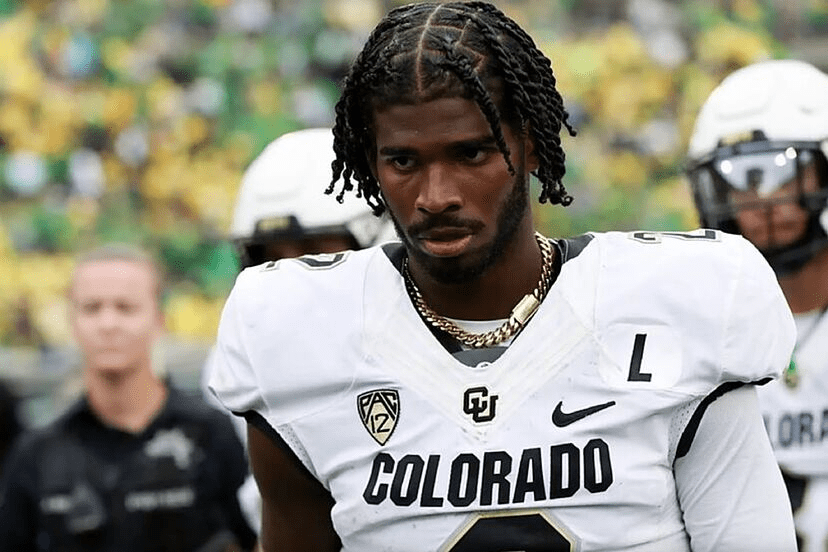
Sometimes the draft doesn’t measure how far a player will go.
It only measures how far he’s willing to chase it.
R.M. Sydnor
In the grand theater of the NFL Draft, where reputations are written in real time and futures are placed on the clock, few storylines carried as much quiet drama as Shedeur Sanders’ unexpected slide. Once projected as a late first-round talent, Sanders spent the early rounds pacing the sidelines while others sprinted toward their NFL dreams. By the time Cleveland called his name at 144 overall, the draft board had not so much rejected him as dared him to take the long road home.
A Field General Behind a Broken Wall
At Colorado, Sanders was nothing short of a quarterbacking maestro under siege. He set the NCAA record for career completion percentage at 71.8%, threw for over 4,100 yards, and did it all while dodging pressure that would have folded lesser players. Colorado’s offensive line often looked like a levee with too many cracks — allowing 95 sacks over two seasons — yet Sanders stayed poised in the pocket, delivering strikes while taking hit after hit.
If quarterbacking were a prizefight, Sanders was the fighter who, bloodied and bruised, still kept throwing clean jabs until the final bell.
More Than Numbers: The Perception Gap
But as any seasoned scout will tell you, draft day isn’t just about how you throw the ball; it’s about how you carry the huddle, the locker room, and sometimes the burden of your own name.
Despite his gaudy stats, questions began circulating about Sanders’ demeanor during interviews. Reports leaked of “brashness,” whispers of “me over team” energy. Wearing New York Giants-themed cleats before the draft didn’t help — some front offices saw it as swagger bleeding into spectacle.
Fair or unfair, perception in the NFL can hit harder than any linebacker. Some prospects projected a humble, head-down, team-first aura that teams clung to like a playbook in a blizzard. Sanders, carrying both the glory and glare of being Deion Sanders’ son, may have been seen as a player still learning that leadership isn’t just played between the lines — it’s lived everywhere else.
Cleveland’s Calculated Gamble
The Browns, however, took the swing. With Deshaun Watson, Kenny Pickett, Joe Flacco, and rookie Dillon Gabriel already on the roster, they didn’t need Sanders immediately. They can let him sit in the bullpen, warm up slowly, and learn the ropes without the crushing weight of carrying a franchise from day one.
For Cleveland, this was less a Hail Mary and more a smart, third-and-short sneak — low risk, high upside. Sanders can sharpen his footwork, speed up his progressions, and learn the politics of the professional locker room at a sustainable pace.
The Chip Grows Heavier
Players who slide on draft day often carry a weight heavier than pads and helmets. Tom Brady never forgot the 198 names called before his; Aaron Rodgers sat in the green room long enough to build a career’s worth of resentment.
If Sanders can channel that same fourth-quarter mentality — where every drive matters and no rep is wasted — he won’t just match the quarterbacks drafted ahead of him. He might lap them.
The field is longer now, sure. But so was Brady’s. So was Montana’s. So was every player who was told, in so many polite scouting words, “we see someone else before we see you.”
A Longer Field to Drive — But No Less a Goal Line
Sometimes, the best quarterbacks aren’t the ones who throw perfect spirals in the first quarter; they’re the ones still standing when the final whistle blows. Sanders has the tools, the arm, and the resilience. What remains is refining the leadership between Sundays — mastering not just the playbook, but the play after the play, the discipline after the spotlight fades.
If he does, Sanders won’t just find a home in the NFL. He’ll build a mansion where others built only tents.
The ball is still on the tee. The game clock hasn’t even started ticking for him yet.
And make no mistake — there are few things more dangerous in football than a quarterback with talent, time, and a chip on his shoulder the size of the end zone.
 Notes On Scorecard
Leave a comment