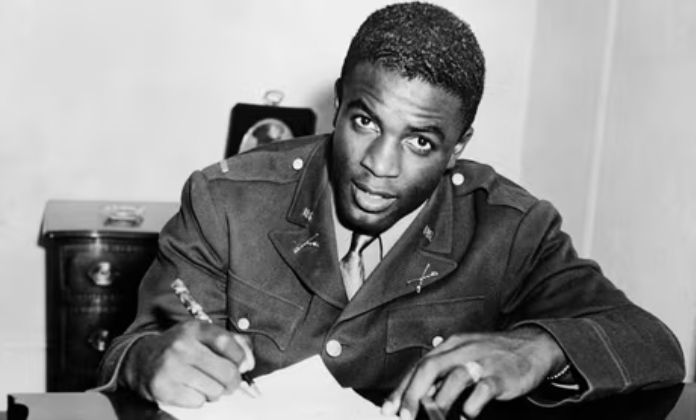
The attempt to erase Jackie Robinson’s military service from public record was no accident. It was an act of deliberate distortion — part of a broader campaign by Donald Trump and his Republican allies to rewrite America’s past in ways that serve their ideological agenda. This calculated move wasn’t just a bureaucratic misstep; it was an assault on memory itself — an effort to cleanse the nation’s history of the struggles that define its progress.
When the Department of Defense quietly removed an article about Robinson’s military service from its website, they weren’t merely editing content — they were airbrushing a scar from America’s face. That scar tells a story — one of injustice, defiance, and triumph. To erase it is to erase Robinson’s courage and the hard-earned victories that his defiance made possible.
This wasn’t just an insult to Robinson’s legacy. It was an attack on truth itself.
The Meaning and Purpose of DEI
The Pentagon’s attempt to erase Robinson’s story came as part of a broader purge of content related to Diversity, Equity, and Inclusion (DEI). The GOP has painted DEI as a divisive agenda — a distortion that misrepresents its true purpose.
DEI isn’t about favoritism or exclusion — it’s about ensuring that the full spectrum of American voices is heard. It exists to restore the stories that history too often ignored or deliberately suppressed. Each component of DEI addresses a distinct need:
Diversity ensures representation — making certain that institutions reflect the racial, ethnic, and cultural variety that defines America.
Equity addresses systemic imbalances — ensuring those who have been historically marginalized have fair access to opportunity and recognition.
Inclusion ensures that those voices are not just present, but empowered to shape the narrative.
DEI doesn’t distort history — it corrects it. It brings forth the figures who defied oppression, confronted injustice, and forced America to live up to its ideals. Figures like Jackie Robinson.
By targeting DEI content, the Pentagon’s purge was more than a bureaucratic decision — it was a calculated attempt to suppress uncomfortable truths. Robinson’s story wasn’t removed because it was irrelevant — it was removed because it was inconvenient. His refusal to submit to racism — whether on a Texas bus or in a baseball stadium — challenges the very revisionist narrative the GOP now seeks to advance.
Jackie Robinson: A Legacy Etched in Defiance
Jackie Robinson’s story begins long before he wore the uniform of the Brooklyn Dodgers. It begins with another uniform — that of a U.S. Army officer. Drafted in 1942, Robinson rose to the rank of second lieutenant in a segregated military. But his defining moment came not on a battlefield, but aboard a bus in Fort Hood, Texas.
In 1944, Robinson was ordered to move to the back of the bus — an all-too-familiar demand in a country that expected Black soldiers to serve quietly while their rights were ignored. Robinson refused.
That refusal triggered swift retaliation. He was charged with multiple offenses, including insubordination. Facing an all-white panel in a military courtroom, Robinson stood his ground. The court-martial unraveled under the weight of its own injustice, and Robinson was acquitted. But the damage had been done. His military career was effectively over.
Yet in that courtroom, Robinson forged the quiet strength that would define his journey in Major League Baseball. His defiance on that Texas bus became a dress rehearsal for the racism he faced when he broke baseball’s color barrier in 1947. The jeers. The hate mail. The threats to his family. Robinson knew defiance came at a cost — and yet, he stood firm. Just as he had done in Fort Hood.
To erase Robinson’s military defiance is to erase the roots of his courage. His strength was not born from comfort — it was forged in adversity. His defiance didn’t exist in isolation — it was shaped by systemic racism and sharpened by confrontation. Without that context, Robinson’s courage becomes hollow — a triumph without struggle.
The GOP’s War on History
The Pentagon’s attempt to erase Robinson’s military service wasn’t an accident — it was part of a larger campaign by Trump and the GOP to control America’s historical narrative.
Trump’s 1776 Commission, launched in 2020, was a politically motivated attempt to present a “patriotic” version of U.S. history. The commission minimized the horrors of slavery, distorted the Civil Rights Movement, and presented America’s racial struggles as little more than isolated missteps. Its goal was clear: to downplay the nation’s failures and amplify its triumphs — even if that meant burying uncomfortable truths.
In 2023, Republican leaders proposed expunging Trump’s two impeachments from the official record — a symbolic act meant to overwrite history itself. It was an attempt to dictate memory, to make Americans forget what they had seen with their own eyes.
The Fight for Truth
The Pentagon’s decision to erase Robinson’s tribute follows that same pattern — a desperate attempt to rewrite history in favor of a narrative that flatters power and ignores struggle.
The GOP’s attempt to erase Robinson’s story wasn’t just an attack on the past — it was a warning about the future. When history becomes selective — when truth is treated as a matter of convenience — the foundation of democracy begins to crack.
The Backlash: A Nation Refuses to Forget
But truth, like courage, doesn’t yield quietly.
The Pentagon’s attempt to erase Robinson’s story was met with outrage. Veterans condemned the act as a betrayal. Historians decried it as an attempt to sanitize America’s past. Baseball fans invoked Robinson’s legacy as proof that progress requires defiance.
Their voices turned the tide. Robinson’s story was restored — not because those in power had a change of heart, but because those who understand the value of truth refused to stay silent.
But the attempt to erase Robinson’s story reveals a chilling reality: historical truth doesn’t survive by accident. It survives because people fight for it.
History isn’t just a record of what happened — it’s a reflection of who we are. To erase Robinson’s defiance is to erase part of America’s soul. Memory, like muscle, requires exercise. Neglect it, and it weakens. Distort it, and it rots.
The GOP’s attempt to erase Robinson’s military defiance was more than an assault on history — it was an attempt to blind us to the courage that carried this country forward.
Robinson’s story reminds us that truth doesn’t survive by accident — it survives because people refuse to let it die. Without vigilance, history can be reshaped into something hollow — a series of victories without sacrifice, progress without pain.
We don’t just inherit history — we inherit the responsibility to protect it. The Pentagon’s attempt to erase Robinson’s story was a test — a reminder that if we fail to defend the truth, we risk becoming strangers to our own past.
Jackie Robinson’s story is not just a reminder of what America once overcame; it’s a warning of what happens when we forget the cost of that progress.
DEI initiatives don’t distort history — they restore it. They ensure that the sacrifices, struggles, and triumphs of those once overlooked are preserved. To erase those voices is to erase the very meaning of courage.
And courage is something America can’t afford to forget
 Notes On Scorecard
Leave a comment